Legacy Modernisation

Make established systems ready for what comes next.

AI does not require a reckless rebuild. We identify the smallest set of changes needed to expose data, connect workflows and add new intelligence safely.

Business and technology leaders planning change together
01

Shared direction

Connect AI investment to business priorities
02

Better operating model

Redesign roles, workflows and decisions

03

Governed adoption

Build control into everyday use

04

Execution path

Move from roadmap to implemented change

What this solves

What you get, in plain language.

Start with the business problem. We define and deliver the product, workflow or transformation needed to solve it.

At a glance

Best for: Organisations where valuable data and essential workflows sit inside rigid, fragmented or difficult-to-integrate systems.

You leave with: A risk-aware modernisation plan that distinguishes what to retain, wrap, integrate, refactor, migrate or replace.

Pragmatic by design: Modernisation is sequenced around business continuity and measurable value.

Modernisation paths

  • Expose: Make necessary functions and data available through secure APIs or service layers.
  • Connect: Integrate legacy applications with AI services and modern workflow tools.
  • Refactor: Improve components that limit performance, security or maintainability.
  • Modernise data: Improve access, quality, lineage and availability for AI use cases.
  • Migrate selectively: Move workloads where cloud or platform change creates clear value.
  • Replace deliberately: Retire systems only when the business and technical case is stronger than adaptation.

What this changes for you

  • Faster access to data and workflows needed for AI
  • Lower modernisation risk through phased delivery
  • Better interoperability without unnecessary replacement
  • Clear separation between immediate enablement and long-term renewal
  • Improved security, observability and maintainability where required
  • A foundation that supports future agents, automation and analytics

What you receive

  • Application, workflow and dependency assessment
  • AI-use-case requirements and constraint map
  • Retain, wrap, integrate, refactor, migrate or replace analysis
  • Target application and integration architecture
  • API enablement and data-access plan
  • Security, resilience and testing requirements
  • Phased modernisation roadmap
  • Proof or working implementation where scoped
  • Migration, rollback and continuity plan
  • Measurement and technical-debt register

Process

  1. Define the enabling need: Start with the AI or business capability the current estate cannot support.
  2. Map the estate: Identify applications, interfaces, data, dependencies and operational constraints.
  3. Choose the minimum viable path: Compare wrapping, integration, refactoring, migration and replacement.
  4. Design for continuity: Set security, testing, observability and rollback requirements.
  5. Prove the critical connection: Validate the riskiest dependency before larger investment.
  6. Modernise in stages: Deliver usable capability while reducing risk and technical debt deliberately.
How we work

Small-team speed. Enterprise-level discipline.

You always know what is being decided, built and measured.

01

Diagnose

Map value, friction, data and decision rights.

02

Design

Create the target workflow and operating model.

03

Implement

Put priority systems and controls into use.

04

Adopt

Enable teams, monitor outcomes and improve.

Built for reality

Connected. Governed. Ready to operate.

Strategy only matters when it survives systems, governance and adoption.
SystemsCRM · ERP · data · APIs
ControlsAccess · review · audit
PeopleRoles · handoffs · adoption
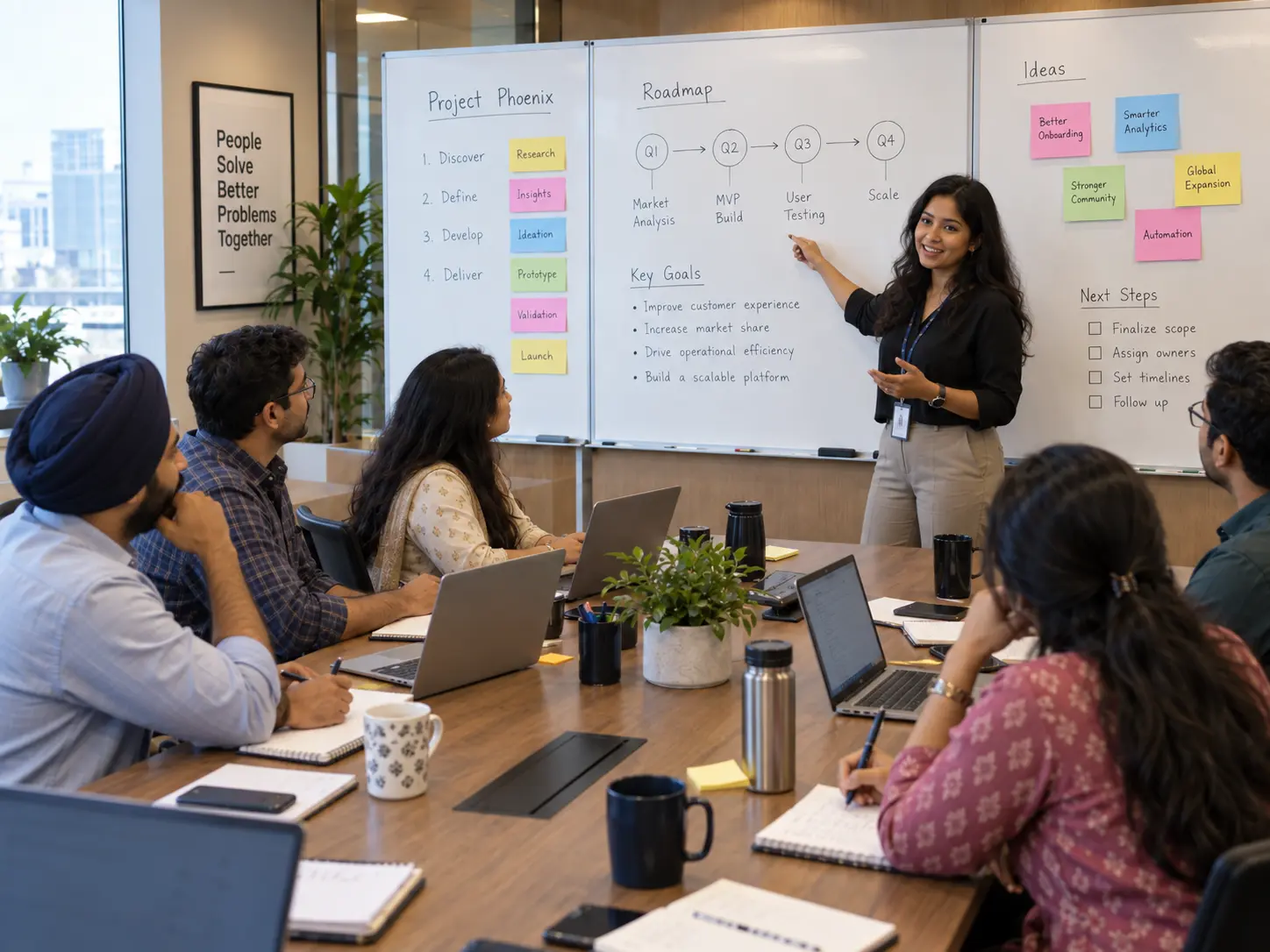
A cross-functional team shaping a transformation roadmap
Relevant exampleClient engagement

Move good loan applications forward faster.

A lending intelligence layer designed to connect lead quality, document readiness, lender fit and disbursement economics in one operating view.

57.8%onboarding completion
36.8%approval rate
Read the case study ↗
FAQ

Questions about Legacy Modernisation

Straight answers before you decide what to do next.

Do we need to replace our legacy applications to use AI?

Not necessarily. Many use cases can be enabled through secure APIs, integration layers, data services or targeted refactoring. Replacement is considered when adaptation creates unacceptable risk, cost or limitation.

What makes a system AI-ready?

It needs appropriate access to reliable data and actions, clear permissions, integration interfaces, sufficient performance, monitoring and controls. Readiness is use-case specific rather than a universal technical badge.

How do you reduce risk during legacy modernisation?

We map dependencies, isolate the riskiest assumptions, establish testing and observability, define rollback options and phase changes around business continuity.

Can you integrate AI before a wider cloud migration?

Sometimes. The feasibility depends on access, security, latency, architecture and operating constraints. We compare interim integration against the longer-term target rather than treating migration as an automatic prerequisite.

How is this different from AI integration services?

AI integration services connect AI into an otherwise suitable stack. Legacy modernisation addresses deeper constraints in applications, interfaces, data and technical architecture that prevent safe or scalable integration.

How long does a typical engagement take?

A focused diagnostic or prototype can take a few weeks. A production build or wider transformation is phased around complexity, integrations, risk and the evidence required at each gate.

What determines the cost?

Scope, workflow complexity, data readiness, integrations, security requirements and the level of production support determine investment. We define the smallest credible first phase before proposing a wider programme.

Can this work with our existing systems?

Usually, yes. We design around your current CRM, ERP, data, communication and operational tools, then recommend replacement only when an existing constraint genuinely blocks the outcome.

How do you handle security and human oversight?

We define access, approval, escalation, audit and monitoring requirements with the workflow. High-impact decisions retain the right human checkpoints and visible accountability.

Have a problem worth fixing?

Tell us what needs to change.

We will help you find the clearest route from business need to working system.

Talk to our team